

From weed to feed: How local innovation is strengthening pastoral resilience

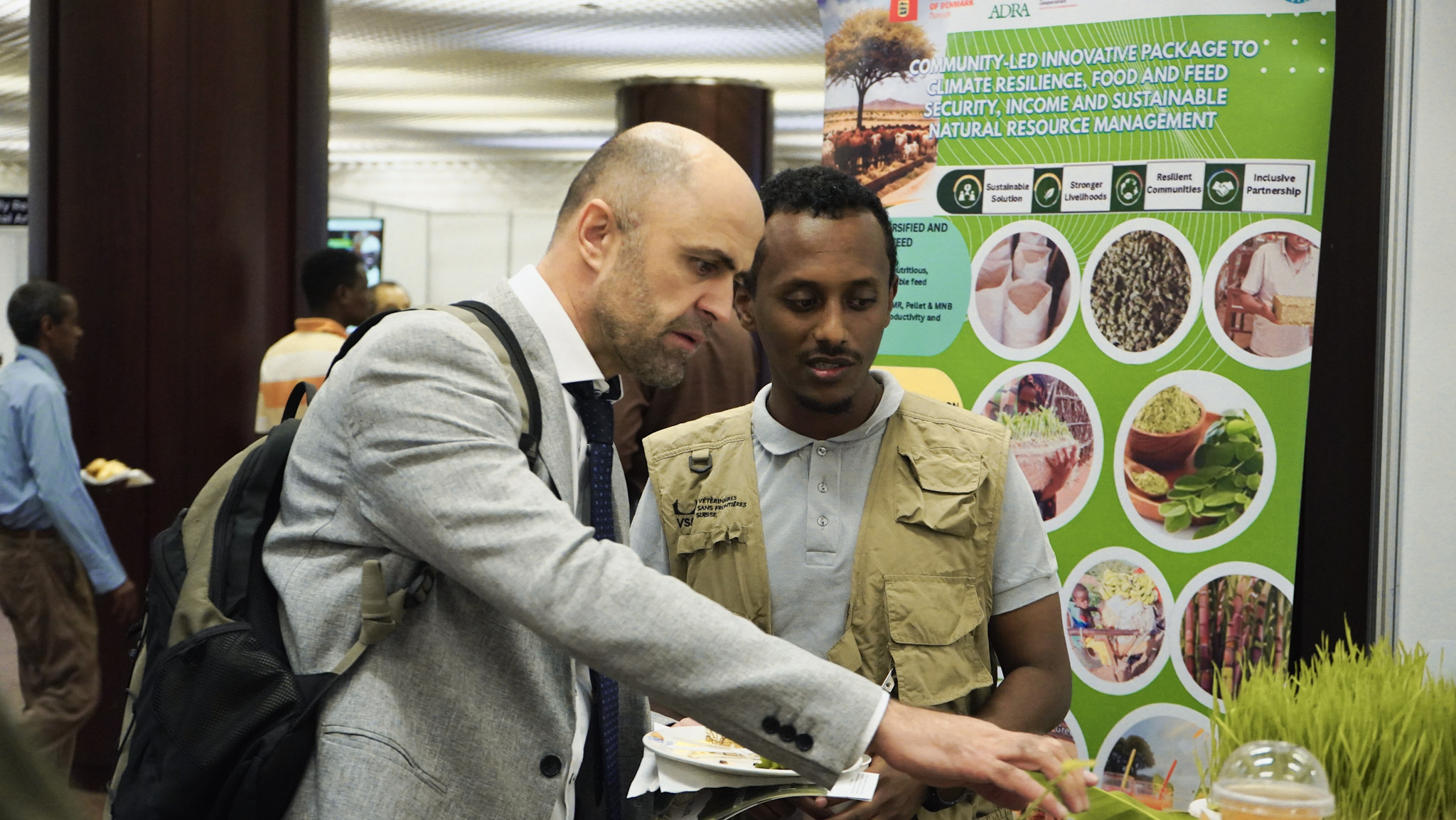
Invited to the Africa Science & Innovation Forum organised by FAO, colleagues from our Ethiopian office showcased how locally adapted innovations can turn environmental challenges into opportunities for more sustainable livestock production and resilient livelihoods.
From invasive plants to resources
Innovation does not always mean introducing something entirely new. Sometimes, it means looking at existing challenges differently, making better use of available resources, and developing practical solutions together with the communities who need them most.
Mesquite is a clear example.
This drought-tolerant leguminous tree, also known as Prosopis, has become one of the world's most problematic invasive wood plants in dryland ecosystems. With deep roots, extreme drought tolerance and seeds that stay viable for years, it is almost impossible to stop this plant from spreading. For agropastoral communities, Prosopis has been a problem for years. The plant takes over large areas of rangeland and draws water from the soil through its deep roots. Native plants important to the ecosystem are displaced and rangeland shrinks, resulting in lower livestock productivity and threatening food and nutrition and livelihoods of herders.
Once seen as a threat to rangelands and pastoral livelihoods, Prosopis is now processed into valuable feed products and used in Total Mixed Ration (TMR), multi-nutrient blocks, and TMR pellets. This approach creates value from an invasive plant while helping reduce pressure on natural grazing areas and increasing the resilience of agropastoral communities by ensuring fodder for their livestock.
From local solutions to lasting results
Among the other innovations showcased at the FAO Forum by VSF-Suisse, was a nutritious fodder produced in just seven days, using minimal water and space, and no soil. It offers a supplementary feed for key breeding animals during droughts and feed shortages.
Innovation also means diversifying income and food production: households can grow more fruit, such as papaya, banana and lemon, and diversify fodder crops such as moringa, leucaena, elephant grass and Sudan grass. This goes hand in hand with locally adapted agroecological practices, such as composting and integrated pest management, which make good use of local organic resources.
With this holistic approach, agropastoral communities can diversify their livelihoods, increase their food and nutrition security, and gain new job and income opportunities.

Latest reports and stories
Learn about our successes and challenges on the ground in Africa.

From weed to feed: How local innovation is strengthening pastoral resilience
Sufosec Alliance in Scientific Reports: our data stand up to scientific scrutiny

From camel milk to women in leadership
Latest reports and stories
Learn about our successes and challenges on the ground in Africa.
From weed to feed: How local innovation is strengthening pastoral resilience
Sufosec Alliance in Scientific Reports: our data stand up to scientific scrutiny
From camel milk to women in leadership
Donate Now
Our work is only possible because people support us. With a donation, you help keep animals healthy and give families a future.
