

Eight principles for emergency response

In Akobo and other parts of South Sudan, crises are a recurring reality for many communities. For families who depend on livestock, the consequences can be particularly severe. When a herd is at risk, far more than the animals’ health is at stake: food, income and ultimately an entire family’s livelihood can be threatened.
Simon Gadwech Duol knows this reality well. He works for VSF-Suisse in Akobo and sees how the region is repeatedly affected by different types of emergencies.
But in a crisis, how do you determine what kind of support livestock keepers actually need? Which intervention will help, and which might even do more harm than good?
Eight principles for emergency response
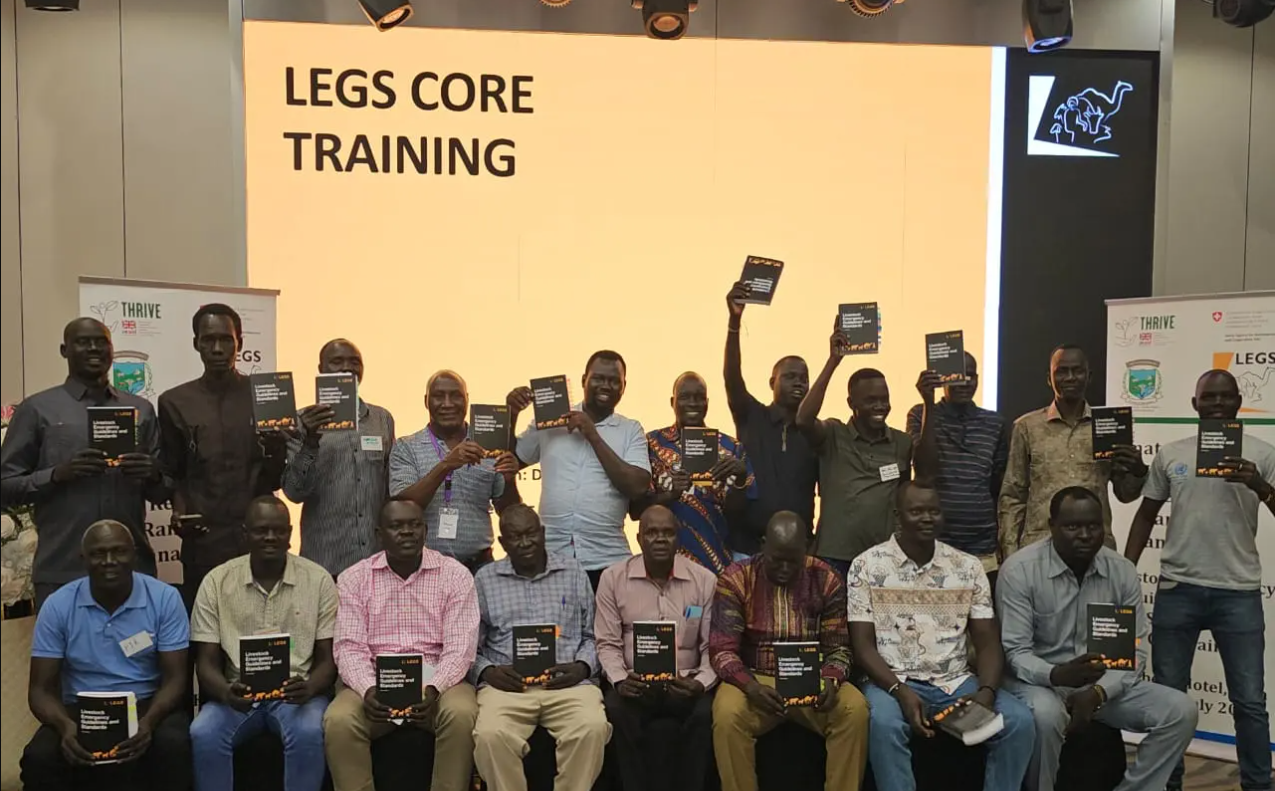
In July, Simon travelled to Juba. Together with 20 other professionals, he took part in a three-day training on the Livestock Emergency Guidelines and Standards (LEGS).
It was Simon’s first LEGS training. What stood out to him in particular were the eight core principles that should guide support for livestock keepers during emergencies.
“I learned a great deal, especially about the eight principles we need to consider when supporting livestock keepers in emergency situations.”
LEGS provides professionals with a framework that goes beyond simply responding as quickly as possible. It helps them first understand what kind of support is appropriate in a specific situation, taking into account both the needs and experiences of affected communities and the information available on the ground.
Taking knowledge back to the communities
For Simon Gadet Ruech from Nasir, the training was also a first. And what he learned in Juba is not meant to stay in the training room.
“This is the first time I have learned about the Livestock Emergency Guidelines and Standards. I am taking this knowledge back to my people. We want our livestock to stay healthy.”
This is where the training can make a lasting difference: the 21 participants, representing different organisations, veterinary services and government institutions, take what they have learned back to their respective areas of work and communities.
When the next crisis hits, they can draw on this knowledge and work with affected communities to identify the support that will best protect their livestock and livelihoods.
Learning today to respond better tomorrow
The training was led by Dr Kwajok Tongun, VSF-Suisse Country Programme Manager and accredited LEGS trainer, together with Dr Julius Kajume, also an accredited LEGS trainer.
For VSF-Suisse, strengthening the skills of local professionals is an important part of long-term emergency preparedness. When expertise is available locally, decisions can be made where their impact is felt most directly.
The LEGS training took place in Juba from 13 to 15 July 2026 as part of the THRIVE project, funded by the UK Foreign, Commonwealth & Development Office (FCDO), and the PROWIGA project, funded by the Swiss Agency for Development and Cooperation (SDC), with support from the Ministry of Livestock and Fisheries and other partners.

Latest reports and stories
Learn about our successes and challenges on the ground in Africa.

New study: Swiss development projects make a difference

Stability in uncertain times: Together for strong international cooperation
Eight principles for emergency response
Latest reports and stories
Learn about our successes and challenges on the ground in Africa.
New study: Swiss development projects make a difference
Stability in uncertain times: Together for strong international cooperation
Eight principles for emergency response
Donate Now
Our work is only possible because people support us. With a donation, you help keep animals healthy and give families a future.
